


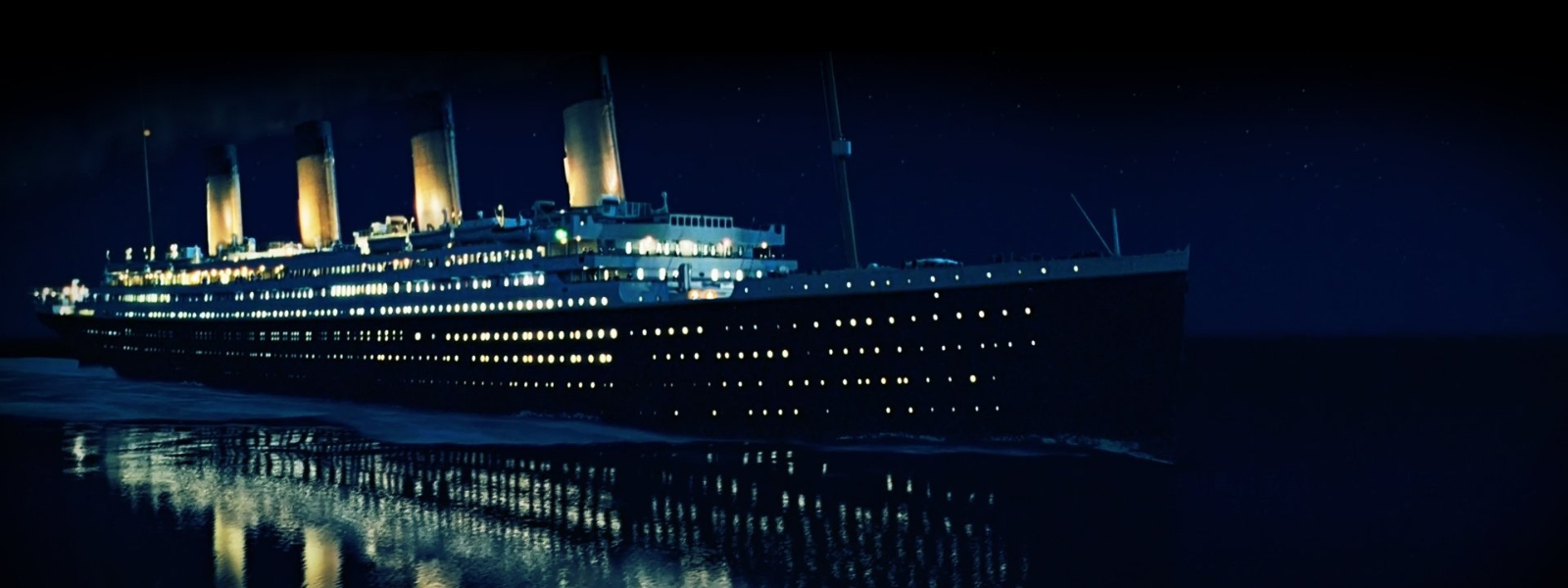
Review – Titanic
Director – James Cameron
Starring – Kate Winslet, Leonardo DiCaprio, Billy Zane, Kathy Bates, Gloria Stuart and Victor Garber
Runtime – 3 hours and 14 minutes
Release date – December 19th 1997
Certificate – 12
Plot – A young aristocrat falls in love with a poor artist aboard the luxurious, ill-fated RMS Titanic.
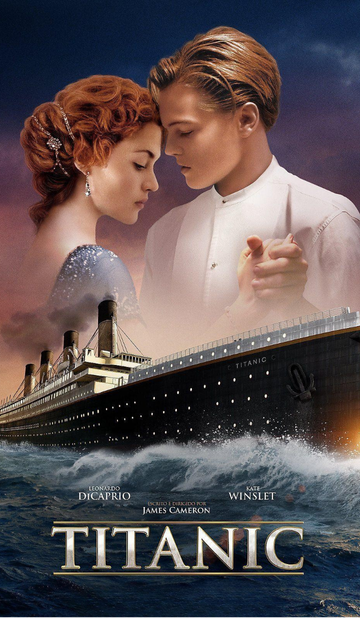
I was sitting on the sofa trying to decide what to watch and review next. I scrolled through endless options before landing on Titanic. Just as I was about to keep searching, a thought crossed my mind: what other film is equal parts period drama, romance and disaster movie all rolled into one? Nearly thirty years later, it’s still almost impossible to think of another film that blends those genres this effortlessly. It genuinely offers something for almost everyone. If sweeping romances aren’t your thing, the second half transforms into one of the most intense disaster films ever made. If you’re less interested in the sinking itself, the emotional relationship between Jack and Rose will probably keep you invested. Thankfully, I enjoy all three genres, so the decision was made for me. It was time to revisit Titanic.
There are plenty of reasons why Titanic has remained one of cinema’s defining achievements, but I think its greatest strength is that it builds upon one of history’s most famous tragedies. Even if someone has never watched James Cameron’s film, they’ll instantly know what you mean when you mention the Titanic. The ship that struck an iceberg and sank in 1912 has become part of our collective memory. Cameron wasn’t simply making another fictional blockbuster; he was bringing one of the world’s most recognisable historical events to life. That familiarity creates an emotional foundation before the opening scene has even begun.
What impresses me most is the screenplay James Cameron crafted around those historical events. A film that simply documented the sinking would still be fascinating, but how do you keep audiences emotionally invested during the hours before disaster strikes? Cameron’s answer was to create one of cinema’s greatest love stories. Jack Dawson, played with effortless charisma by Leonardo DiCaprio, and Rose DeWitt Bukater, portrayed beautifully by Kate Winslet, are unforgettable characters. Their relationship develops naturally despite their completely different worlds, and before long you become emotionally attached to them. That attachment changes everything. When the Titanic finally collides with the iceberg, you aren’t just watching history unfold, you desperately want these two fictional characters to survive it. The historical tragedy suddenly becomes deeply personal.
What makes all of this even more remarkable is that everyone watching already knows exactly how the story ends. The ship is going to sink. Jack and Rose aren’t sailing off into the sunset. History has already written the ending. Yet James Cameron somehow makes you forget that for long stretches, only to remind you with one deafening scrape against the iceberg. From that moment onwards, the entire film shifts gear. Every conversation, every corridor and every decision suddenly carries far more weight because you’re no longer simply watching history unfold, you’re desperately hoping these characters you’ve grown to love can somehow escape the inevitable.
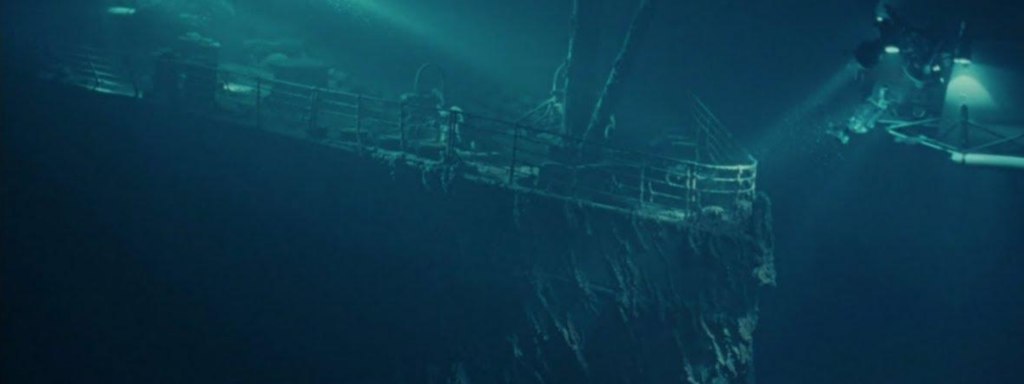
Watching it again, I found myself appreciating just how extraordinary the film still looks. It’s honestly difficult to believe this was released back in 1997. There are blockbuster films released today with far larger budgets that don’t look this convincing. The opening sequence, following the submersible across the silent ocean floor before revealing the enormous wreck of the Titanic, remains breathtaking. It’s beautiful, haunting and strangely unsettling all at once. The remains of the ship emerge from the darkness like an ancient monument on an alien planet. I’ve read that James Cameron actually shot footage of the real Titanic wreck during his deep sea dives, and while I don’t know whether this specific sequence uses any of that material, I honestly wouldn’t be surprised. Even before we step back into 1912, Cameron reminds us that this magnificent vessel eventually became a ghostly tomb beneath the Atlantic.
The production itself almost feels impossible. James Cameron has famously visited the real Titanic wreck multiple times, and that level of dedication shines through every frame. Plenty of filmmakers research their subjects, but Cameron seems incapable of doing anything by halves. He literally descended miles beneath the ocean to study the ship for himself. That passion for authenticity feeds directly into the film, whether it’s the layout of the grand staircase, the engine rooms or the tiny historical details that make the ship feel completely alive. It’s the sort of filmmaking commitment that deserves enormous respect.
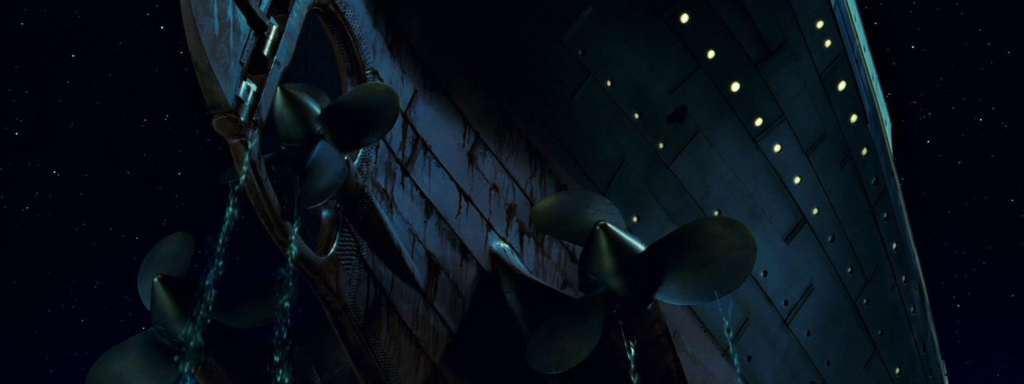
When the disaster finally unfolds, the practical craftsmanship becomes the film’s greatest weapon. So much of the sinking was achieved using huge practical sets, enormous water tanks and full scale sections of the ship. You can feel the weight of the steel, the force of the rushing water and the panic spreading through every corridor. Modern audiences are used to digital destruction, but there’s something about practical effects that our eyes instinctively believe. One image in particular still takes my breath away every single time: the water calmly and eerily spilling over the foredeck as the front of the ship begins to disappear beneath the surface. It’s such a striking visual that it almost forces you to hold your breath. Then, later, as the ship begins lifting into the night sky and the giant propellers slowly rise from the water, the scale of the disaster suddenly becomes horrifyingly real.
What perhaps surprised me most on this rewatch was how emotional the sinking remains, even when you know exactly what’s coming. Some of the most devastating moments aren’t the spectacular visual effects, but the quieter scenes of people accepting that there is no escape. The elderly couple lying together in bed, parents comforting frightened children, the musicians continuing to play as chaos surrounds them, these moments remind you that behind every historical statistic were real human lives. Cameron never allows the spectacle to overshadow the human cost, and I think that’s one of the reasons the film continues to resonate nearly three decades later.
Of course, no discussion about Titanic would be complete without mentioning Celine Dion’s My Heart Will Go On. Movie theme songs don’t seem to dominate popular culture in quite the same way anymore, but this one became inseparable from the film itself. The moment those opening notes begin, almost everyone immediately thinks of the Titanic. It’s one of those rare songs that somehow extends the emotional impact of the film long after the credits have rolled. Love it or not, it’s impossible to separate the two.
The performances deserve enormous praise as well. Leonardo DiCaprio perfectly captures Jack’s optimism and free spirit without ever making him feel unrealistic, while Kate Winslet gives Rose incredible emotional depth. She transforms from someone trapped by expectations into someone determined to choose her own future. Their chemistry is undeniable, which is exactly why the ending hurts so much. Yes, I’m fully aware this is hardly a spoiler after nearly thirty years, but Jack’s death still lands with devastating force. Even knowing it’s coming doesn’t soften the emotional blow. And then there’s that debate. Could both Jack and Rose have fit on the floating door? Personally, I’ve always been on Team There Was Room. Whether Jack could actually have stayed afloat is another debate entirely, but physically? I still think they both fit. It’s become one of cinema’s most famous arguments, and while buoyancy is technically the bigger issue, I do think the props department could have avoided decades of debate by making the door slightly smaller!
If I have one criticism, it’s the runtime. At 3 hours and 14 minutes, Titanic asks for a serious commitment. To be fair, I never found myself bored. Every scene either develops the characters or increases the tension, but there’s no escaping the fact that it’s a very long film. James Cameron clearly enjoys making epics, and Titanic is no exception. If you’re planning a rewatch, make sure you’ve got plenty of time and a comfortable seat.
The ending remains one of the most emotional conclusions in blockbuster cinema. Whether you interpret the final moments as Rose dreaming or something more spiritual, it provides a beautiful sense of closure after everything the characters have endured. It’s bittersweet in exactly the right way, leaving you with sadness but also hope. Few films manage to balance heartbreak and satisfaction quite so effectively.
There is a reason Titanic continues to be regarded as one of the greatest films ever made. Whether it personally lands in your favourite movie list of all time is ultimately down to personal preference, it’s not in mine, but that is not because it is a bad film, but because other films have resonated with me more. However, it’s impossible to deny the craftsmanship, ambition and emotional impact on display. Apart from its lengthy runtime, there is very little to criticise. Nearly thirty years later it still looks remarkable, still delivers unforgettable performances and still provides one of the greatest cinematic spectacles ever put on screen. It’s a film I’ll happily return to every few years because it reminds me just how magical filmmaking can be.
One final thought struck me after the credits rolled. The real Titanic continues to deteriorate beneath the Atlantic Ocean. Scientists have warned that, over time, the wreck will eventually collapse to the point where much of it will be lost forever. One day, future generations may never be able to see the ship as we know it today. In a strange way, that makes James Cameron’s film feel even more important. Beyond being an incredible piece of entertainment, it has become one of the most vivid ways of preserving the memory of one of history’s most famous ships. The real Titanic may eventually disappear beneath the Atlantic as time takes its toll, but James Cameron has ensured the ship and the thousands of lives connected to it will never truly be forgotten. That’s a legacy very few films can claim.