


Review – Iron Man 3
Director – Shane Black
Starring – Robert Downey Jr., Ben Kingsley, Jon Favreau, Guy Pearce, Gwyneth Paltrow, Don Cheadle, Ty Simpkins and James Badge Dale
Runtime – 2 hours and 10 minutes
Release date – 25th April 2013
Certificate – 12
Plot – Suffering from PTSD, Tony Stark encounters a formidable foe called the Mandarin. When he watches his world fall apart, he must rely on his own instincts as he embarks on a journey of retribution.
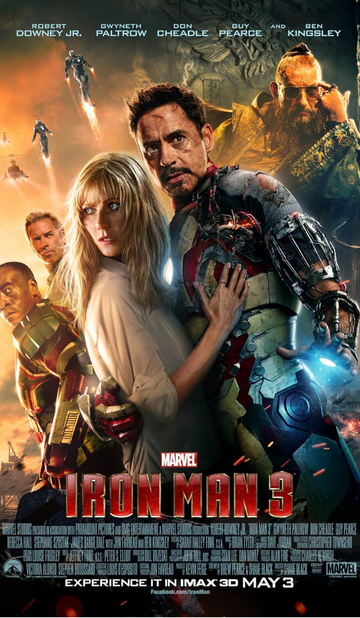
Following the monumental success of The Avengers was always going to be an impossible task for the MCU. At the time, it genuinely felt like the biggest superhero event cinema had ever seen, and suddenly Iron Man 3 had the responsibility of kicking off Marvel’s next chapter. What I appreciate most revisiting the film now is that it doesn’t even attempt to outdo the scale of New York. Instead, it focuses entirely on the psychological aftermath of it. Tony Stark is no longer the arrogant genius who believes he can control every situation with a sarcastic remark and another upgraded suit. After literally flying a nuclear missile through a wormhole into space, he’s shaken to his core. For the first time, Tony truly understands how enormous and terrifying the universe really is, and you can see the seeds being planted for the paranoia and obsession that would shape his future throughout the MCU. The PTSD angle adds far more depth to the movie than I remembered, and it gives the story an emotional weight that separates it from the more straightforward action of the previous films.
This was also the first Iron Man movie without Jon Favreau directing, and you can absolutely feel the difference. Shane Black brings a completely different style to the character and the world around him. The film feels less polished and less rock-and-roll compared to the first two movies, almost more like a grounded detective thriller wrapped inside a superhero film. At times, it loses some of the charm and energy that Favreau brought to the franchise, but Black still manages to deliver an entertaining and surprisingly character-driven story. There’s a stronger emphasis on dialogue, mystery and Tony himself rather than simply building towards massive action sequences every twenty minutes. Black also injects his signature style of humour throughout the film with fast-paced dialogue, awkward interactions and dry sarcasm that gives the movie its own identity. Tony’s scenes with Harley in Tennessee are a great example of this and lead to some genuinely funny exchanges while also showing a more human side to Tony that we rarely saw before. That tonal shift won’t work for everyone, but I respect the fact the movie tried something different rather than simply repeating the formula.
Of course, the most divisive part of the film is undoubtedly The Mandarin twist. The marketing for this movie made Ben Kingsley look genuinely terrifying. Every trailer painted The Mandarin as this cold, calculating terrorist mastermind and, honestly, the first half of the movie completely sells that illusion. Kingsley’s voice, the unsettling broadcasts and the atmosphere surrounding the character were incredibly effective. Then comes the reveal that the feared terrorist is actually Trevor Slattery, a washed-up actor hired to play a role. It’s one of those twists that really is like marmite — you either love it or you hate it. I completely understand why comic fans were frustrated because it felt like the movie pulled the rug out from under them, but at the same time I can’t deny how funny Trevor Slattery is. Kingsley commits so fully to the performance that every scene with him becomes hilarious. Over time, I’ve grown to appreciate the twist far more than I did originally, especially because the MCU eventually gave audiences the real Mandarin years later in Shang-Chi and the Legend of the Ten Rings.
The real villain of the movie, Aldrich Killian, is actually far better than he often gets credit for. Guy Pearce brings a lot of confidence and menace to the role, but what makes Killian interesting is that Tony Stark unintentionally created him. One careless interaction years earlier completely changed the course of Killian’s life, and the film cleverly turns Tony’s arrogance into the root cause of the conflict. That’s something Iron Man movies have always done well — Tony’s greatest enemy is often himself. Killian’s Extremis plot may not be the MCU’s most memorable villain storyline, but it works because it directly ties into Tony’s past mistakes and forces him to confront the consequences of the person he used to be.
One of the most refreshing aspects of the film is how much time Tony spends without the Iron Man suits. In many ways, this feels more like a Tony Stark movie than an Iron Man movie, but that actually becomes one of its strengths. Watching Tony stranded with limited resources highlights just how intelligent and resourceful he really is. Whether he’s building gadgets from scratch, setting traps like a mechanic version of Home Alone, or reconstructing a crime scene through holographic technology after Happy’s injury, the movie constantly reminds you that the suit was never what made Tony special. His investigation throughout the film is genuinely entertaining because it allows Robert Downey Jr.’s charisma and intelligence to carry scenes without relying entirely on CGI spectacle.
The emotional core of the movie is also stronger than I remembered, particularly with Tony and Pepper’s relationship. Gwyneth Paltrow actually has far more to do here than in most MCU appearances, and the film does a good job showing how Tony’s anxiety and obsession with building suit after suit is beginning to damage their relationship. There’s a constant fear that Tony is losing himself after New York, and Pepper becomes the person trying to pull him back to reality. It makes the stakes feel far more personal than just another world-ending threat, which helps ground the story emotionally.
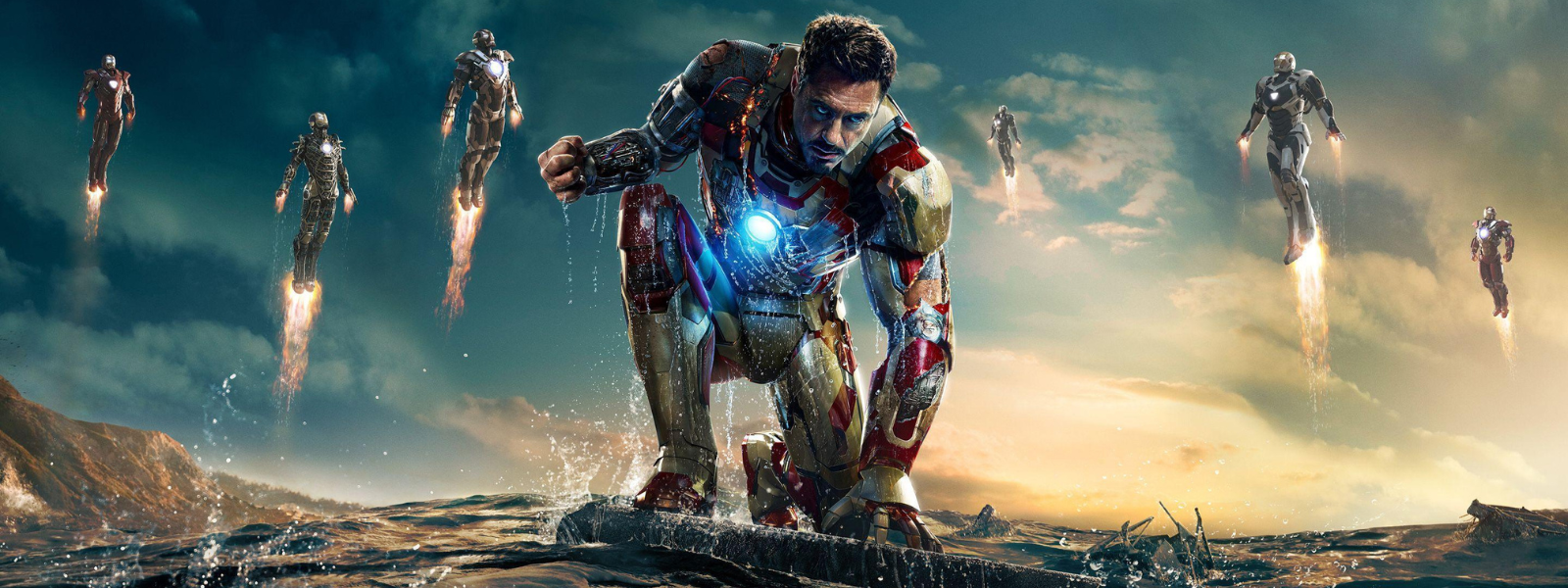
That being said, the action sequences are still fantastic when the movie decides to unleash them. The destruction of Tony’s mansion remains one of the standout scenes in the entire trilogy. The image of missiles tearing through the windows while Tony desperately tries to protect Pepper is incredibly intense, and seeing him instantly send the Mark 42 armour onto Pepper instead of himself tells you everything about how much he’s changed as a character. It’s chaotic, emotional and visually brilliant all at once. Then there’s the Air Force One rescue sequence, which is easily the money shot of the movie. Tony grabbing thirteen falling passengers in mid-air is exactly the kind of larger-than-life superhero moment you want from an Iron Man film, and it’s executed perfectly. The final battle, with Tony summoning all of his different suits, is also undeniably cool. Watching the “House Party Protocol” unleash every variation of armour he’s built over the years feels like a reward for fans who love the tech side of the character.
One thing the movie does miss, however, is the musical identity of the previous films. The score itself sounds heroic and cinematic, but there’s definitely something absent without the heavy use of AC/DC music that became synonymous with Tony Stark. From the first Iron Man right through to his entrance in The Avengers, that music helped define the swagger and attitude of the character. Without it, Iron Man 3 sometimes feels like it’s missing a little of the rebellious energy that made Tony so iconic in the first place. Thankfully, Robert Downey Jr. is still phenomenal in the role. Even when the MCU movies around him aren’t perfect, he remains the franchise’s greatest character. His charisma feels effortless, but what makes this performance stand out is the vulnerability underneath it all. You can see Tony slowly breaking under the pressure of everything he’s experienced, and Downey sells every panic attack and emotional moment convincingly.
What surprised me most revisiting the film is how much more I enjoyed it compared to when I first watched it years ago. Back then, I think I was disappointed because I expected something bigger and more traditional after The Avengers. Watching it now, I appreciate that it dared to focus more on the man than the machine. Tony’s character development is genuinely strong throughout the film. Desperation forces him to recognise the mistakes of his past, and you can clearly see how much he has matured across his trilogy and his time with the Avengers. It still doesn’t come close to matching the brilliance of the first Iron Man movie, but I do think it’s comfortably better than Iron Man 2.
The ending is probably where the movie stumbles the most. Everything suddenly feels rushed as the film tries to wrap up Tony’s arc as neatly as possible. The decision to remove the shrapnel from his chest feels strange because it almost takes away one of the defining characteristics of the character we had followed for years. It works symbolically as Tony finally trying to move beyond Iron Man, but it still feels oddly abrupt considering how central that arc reactor had been to his identity. Even so, the film ends on an intriguing note because you know Tony Stark is nowhere near finished evolving yet.
Iron Man 3 isn’t a great movie, and there are definitely parts of it that feel messy or frustrating, but it’s an uneven movie, still a genuinely entertaining one. It had the incredibly difficult challenge of following what was, at the time, arguably the greatest superhero movie ever made, and instead of trying to go bigger, it chose to go more personal. That decision won’t work for everyone, but revisiting it now, I respect the movie far more for taking that risk. It’s flawed, uneven and occasionally frustrating, but it also contains some genuinely fantastic character work for Tony Stark, and that alone makes it worth revisiting.