


Review – Star Trek (2009)
Director – J.J. Abrams
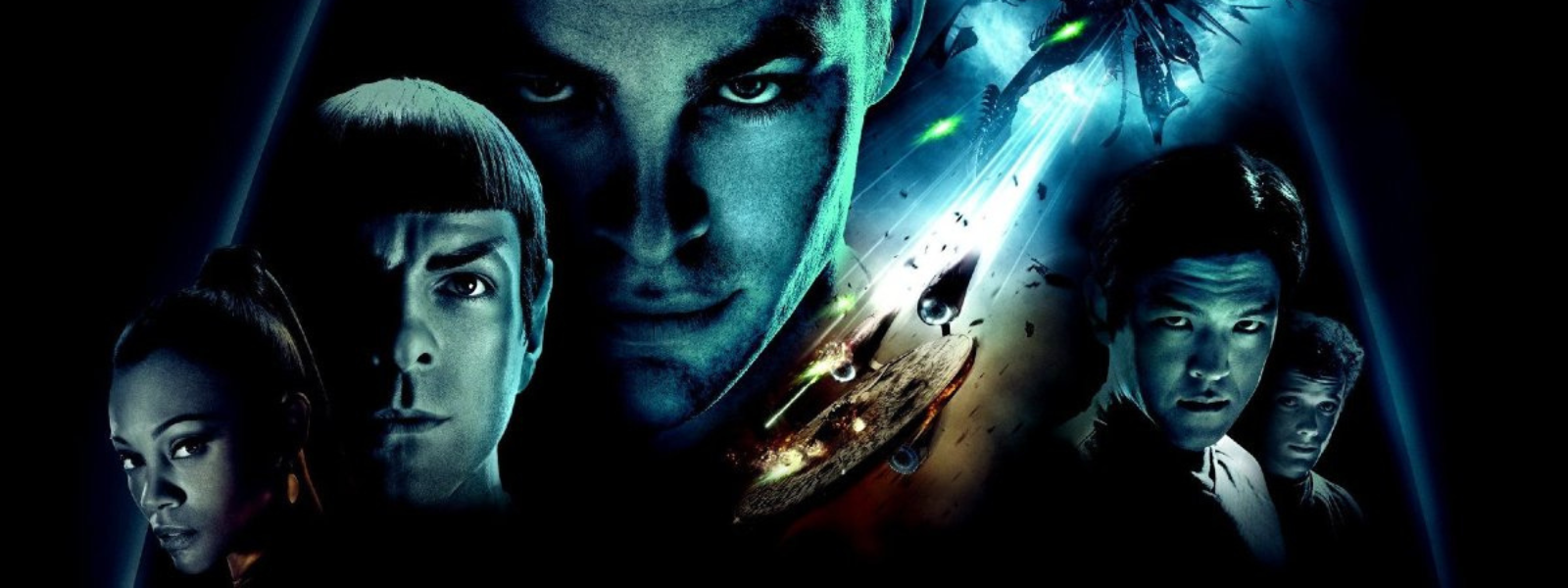
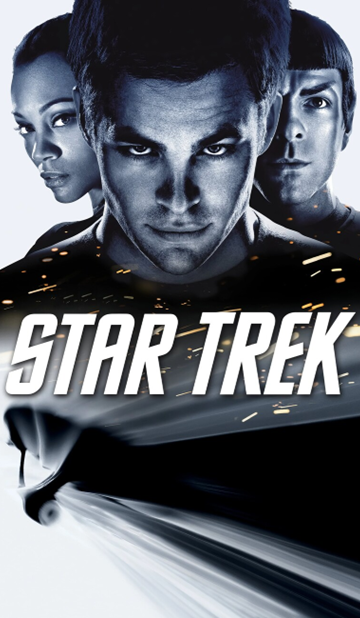
Starring – Chris Pine, Zachary Quinto, Simon Pegg, Zoe Saldaña, Karl Urban, John Cho, Anton Yelchin, Eric Bana and Bruce Greenwood
Runtime – 2 hours and 7 minutes
Release date – 8th May 2009
Certificate – 12A
Plot – James Kirk, a brash young man, and Spock, an alien with human and Vulcan blood, join the crew of the USS Enterprise to combat Nero, a member of the Romulan race who wants to destroy multiple planets.
I was never a Trekkie growing up. I knew who Spock was, I had caught the odd episode on TV, and I had seen a Star Trek film here and there, but I was never a die hard fan quoting stardates or debating captains. So when J.J. Abrams’ 2009 reboot beamed into cinemas, I went in with absolutely no expectations. No baggage. No nostalgia to protect. Just curiosity. And sometimes that is the best possible way to approach a film like this, with your shields down.
This was also the first film I ever saw on an IMAX screen. I was in college studying film, on a trip to London, and we found ourselves with a few spare hours. Someone suggested we head to the BFI IMAX, the largest cinema screen in the UK, and watch Star Trek. I remember walking into that auditorium and craning my neck upwards. The screen stands around 20 metres tall, which for context is the height of a five to seven storey building. I had never seen anything like it. And then the lights went down.
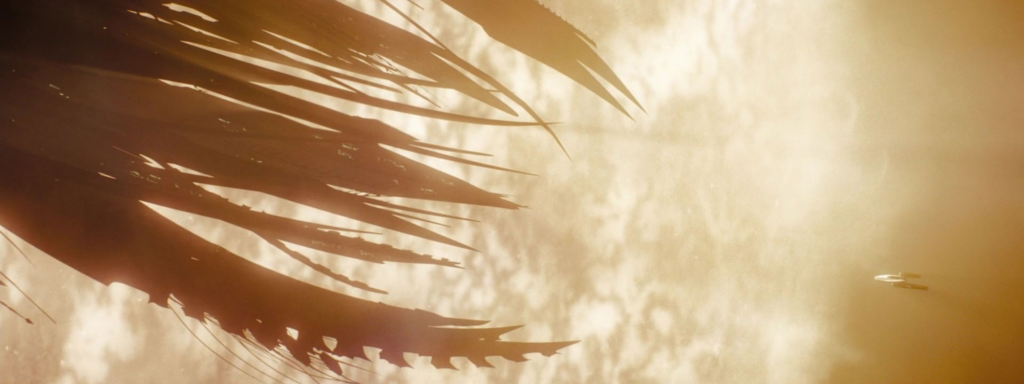
The opening scene is still burned into my memory. Nero’s ship, the Narada, emerging from the anomaly and absolutely obliterating the U.S.S. Kelvin. On that towering IMAX screen, it was not just a scene, it was an assault on the senses. The lasers sliced across space in vivid streaks of colour, explosions bloomed like supernovas, and the sheer scale of destruction felt overwhelming. Michael Giacchino’s score roared through the speakers, the brass triumphant yet tragic, vibrating through my chest. Within minutes, I knew I was watching something special. My senses were in overdrive, and I was completely locked in.
Abrams wastes no time establishing tone. This is a Star Trek that moves. It is kinetic, urgent, and undeniably more action centric than the television series that inspired it. But I do not see that as a flaw. In fact, I think it is one of the film’s greatest strengths. By leaning into blockbuster spectacle while retaining the spirit of exploration and camaraderie, the film opens the franchise up to a wider audience. You do not need decades of canon knowledge to understand it. You just need to strap in and enjoy the ride.
That accessibility does not mean it is hollow. Beneath the warp speed pacing is a story about destiny, grief, and forging your own identity. Chris Pine’s James T. Kirk is reckless but charismatic, a young man haunted by a father he never knew. Zachary Quinto’s Spock is all internal conflict, logic warring with emotion, control battling pain. Their dynamic becomes the emotional engine of the film. It is not just about saving the galaxy, it is about two opposites learning to respect one another and become something greater together.
The cast as a whole is exceptional. This is a true ensemble, and there is not a single weak link among them. Simon Pegg brings warmth and humour to Scotty without turning him into a caricature. Zoe Saldaña gives Uhura intelligence and presence. Karl Urban’s Bones channels DeForest Kelley without feeling like an impersonation. John Cho’s Sulu and Anton Yelchin’s Chekov add charm and energy, and watching Yelchin now carries a bittersweet edge knowing we lost him far too soon. Each actor feels like they fully embody these iconic roles while still making them their own.
Visually, the film is a feast. The ship designs feel sleek yet industrial, especially the reimagined Enterprise, which looks both nostalgic and newly minted. The alien worlds are vibrant and varied, from icy wastelands to sleek Starfleet interiors bathed in sterile white light. The alien designs strike a balance between classic Trek aesthetics and modern blockbuster polish. My only real complaint is Abrams’ overuse of lens flares. He famously shines bright lights directly into the camera lens, and while it sometimes becomes excessive, almost distracting, it also lends the film a distinct, futuristic sheen. It is a stylistic choice that occasionally overwhelms but undeniably gives the movie its own visual signature.
Ultimately, I think Star Trek 2009 is for everyone. In fact, you might even enjoy it more if you are not steeped in decades of lore and simply approach it as a highly entertaining sci fi action adventure. It respects its roots without being shackled by them. I loved it then, and I still rewatch it fairly often now. But no matter how many times I revisit it, nothing will ever quite replicate that first IMAX experience at the BFI, sitting there as a film student, jaw on the floor, realising that cinema on that scale could feel like stepping into another universe.