



Review – Resident Evil (2026)
Director – Zach Cregger
Starring – Austin Abrams, Paul Walter Hauser and Zach Cherry
Runtime – 1 hour and 37 minutes
Release date – 18th September 2026
Certificate – 15
Plot – Tasked with delivering a package to a remote hospital, a courier gets trapped in a sudden outbreak and must fight mutated creatures to survive.
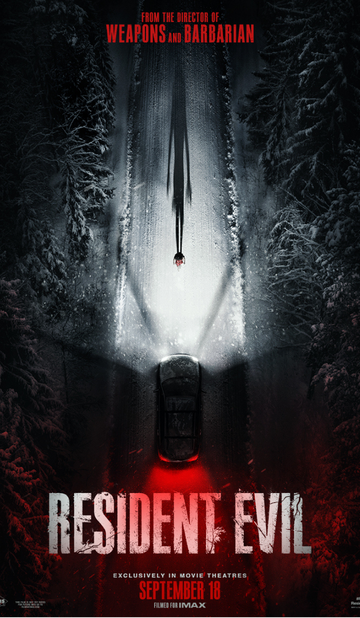
I was incredibly excited to watch Resident Evil. I am a huge fan of the games, and after Barbarian and Weapons, I genuinely believe Zach Cregger is one of the best horror directors working today. Giving him the keys to a universe filled with zombies, grotesque mutations and sinister corporations sounded like a perfect match. My expectations were high, but I was also curious to see whether he could put his own stamp on Resident Evil without losing what makes the games special.
I was never a fan of the Milla Jovovich Resident Evil films because they moved so far away from the source material that they eventually felt almost completely disconnected from the games. However, I enjoyed Resident Evil: Welcome to Raccoon City much more than most people because I appreciated its attempt to recreate familiar characters, locations and moments. It certainly had problems, but I could see the affection for the games behind it.
When it was announced that this film would tell a standalone story without Leon Kennedy, Jill Valentine, Claire Redfield or any of the other established characters, I was surprisingly excited. The Resident Evil universe is enormous, and there is no reason every adaptation needs to retell a story we have already experienced. An original character can still encounter Umbrella, infected creatures and the destruction of Raccoon City while giving us something unpredictable. That is exactly the opportunity this film embraces.
The story follows Bryan, a medical courier played by Austin Abrams, who accepts a job delivering a transplant organ to a hospital in Raccoon City. What initially sounds like a straightforward journey becomes progressively worse as he encounters a zombie, infected dogs and increasingly disturbing mutations. The film constantly changes its surroundings as Bryan moves from snowy roads to an isolated farmhouse, underground tunnels and eventually the city itself. Cregger even uses first person and over the shoulder camera angles to recreate the experience of controlling a character through the games.
Austin Abrams is an inspired choice because Bryan is not a soldier, police officer or trained survivor. He is an ordinary man who is completely unprepared for what is happening around him. Before beginning the journey, he also learns that his girlfriend Michelle is pregnant, and his initial reaction reveals how frightened he is by the idea of becoming a father. That personal situation gives him more depth than simply being another character attempting to survive an outbreak. As the night becomes increasingly horrific, his desire to return home gives the journey an emotional purpose beneath all the blood, panic and comedy.
Cregger has spoken about his love for the games, and that affection is visible throughout the entire film. This genuinely feels like a labour of love rather than a director simply attaching the Resident Evil name to an unrelated zombie movie. There are green herbs, familiar boxes of shotgun shells, healing items, typewriters and padlocks requiring particular keys. Even the way Bryan searches for ammunition and gradually upgrades his weapons recreates the mechanics of the games. You can almost imagine his inventory expanding as the night continues.
The director has said that he wanted the film to work for both the initiated and the uninitiated, and I think he achieves that. Someone who has never played a Resident Evil game can follow Bryan’s increasingly horrific journey and enjoy it as a fast moving survival story. Fans will get an additional layer from recognising the items, creatures, camera angles and game mechanics hidden throughout it. The references reward existing fans without making prior knowledge essential.
My biggest issue with the film is likely to be controversial because this is not a traditional horror movie. It is a horror comedy, and the balance is much closer to fifty percent horror and fifty percent comedy than I expected. The film is incredibly violent, intensely gory and filled with some very effective jump scares, but I laughed far more than I anticipated. Depending on what you want from Resident Evil, that will either be one of its biggest strengths or its most frustrating creative decision.
Comedy can absolutely work in horror, and much of it works here because it comes naturally from the situations. Bryan panics, wastes ammunition and regularly makes questionable decisions, but that makes him feel more human. His reactions create some genuinely hilarious moments because he behaves like a normal person trapped inside a nightmare rather than suddenly becoming an unstoppable action hero. Unfortunately, the film releases the tension too often. Some of the funniest moments pulled me out of scenes that should have become more frightening and intense.
I know some people will argue that the games have always contained comedy, ridiculous dialogue and exaggerated characters. That is true, but it has rarely dominated the experience to this extent. Resident Evil has evolved into action at different points throughout the series, but it has always been first and foremost a horror franchise. What I love most about the games is the survival horror atmosphere and the constant sense of dread that something could be waiting around the next corner. This film occasionally captures that brilliantly, only to interrupt it with another joke.
I have seen several people criticising the ending, but I really enjoyed where the film ultimately takes Bryan and how completely it commits to its increasingly grotesque ideas. The monster designs are excellent, with each infected creature remaining unmistakably Resident Evil even when it is an original creation. The mutations become more elaborate and disgusting as the film continues, and the final creatures look like bosses that would make you immediately start counting how many bullets you have left.
The mutations, combined with the low, pulsating score from Hays and Ryan Holladay, reminded me of John Carpenter’s The Thing, which is one of my favourite horror films ever made. The music has the same minimalist sense of impending danger as Ennio Morricone’s score for that film, while the twisted bodies and practical looking creatures feel inspired by its unforgettable transformations. However, the film does not capture Raccoon City quite as successfully. When Bryan finally sees the skyline, it resembles almost any large American city rather than the distinctive location fans know from the games. Umbrella Corporation is also used surprisingly sparingly. It receives a brief mention and connection to the outbreak, but something so central to Resident Evil deserved a more substantial presence.
At the end of the day, I really enjoyed Resident Evil. I wish it had focused more heavily on horror, but Cregger clearly set out to make a bloody horror comedy and, judged on those terms, he succeeded. This is one of the better Resident Evil films and arguably works best as an original story set within that world rather than a direct video game adaptation. I would happily watch this version continue and would not be against familiar characters gradually being introduced to expand the universe. If a sequel does happen, though, I hope it keeps the inventive monsters, game mechanics and obvious affection for the series while turning down the comedy and allowing the horror to take control.