


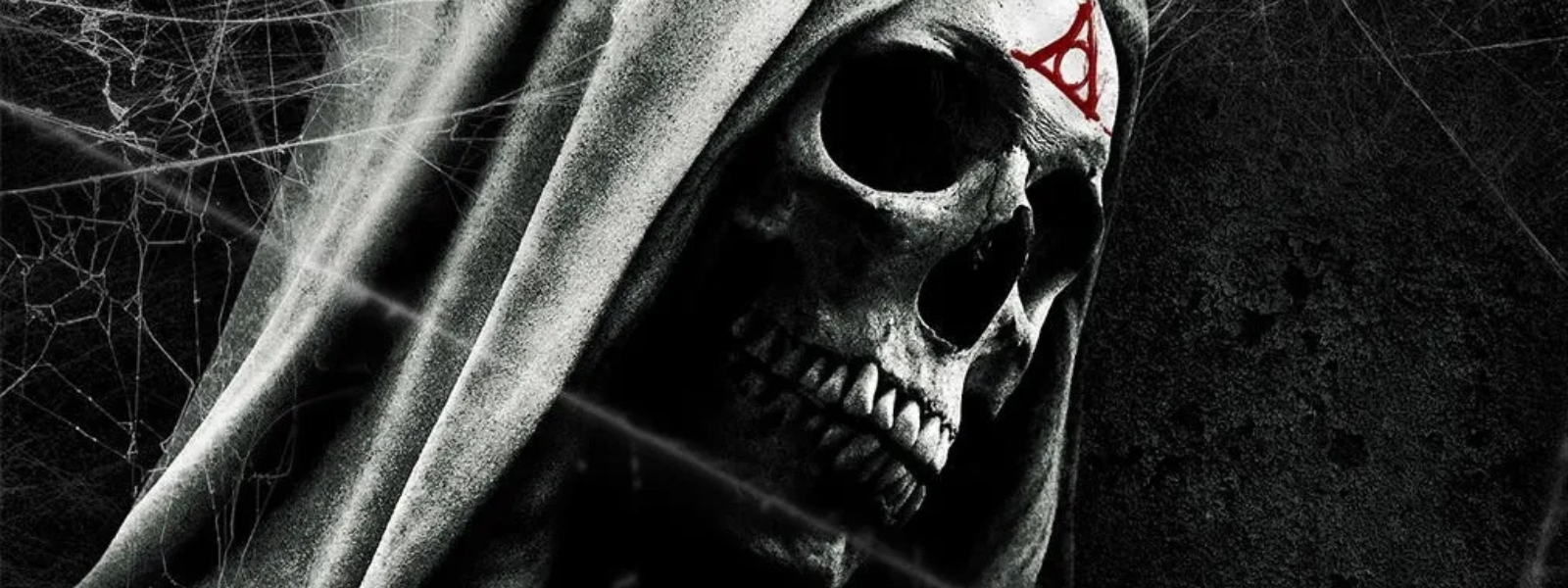
Review – Paranormal Activity: The Marked Ones
Director – Christopher Landon
Starring – Andrew Jacobs, Jorge Diaz and Gabrielle Walsh
Runtime – 1 hour and 24 minutes
Release date – 1st January 2014
Certificate – 15
Plot – After the murder of Jesse’s neighbour Anna, he undergoes a major transformation in his behaviour but he remains unaware of the fact that his body is slowly being taken over by an evil spirit.
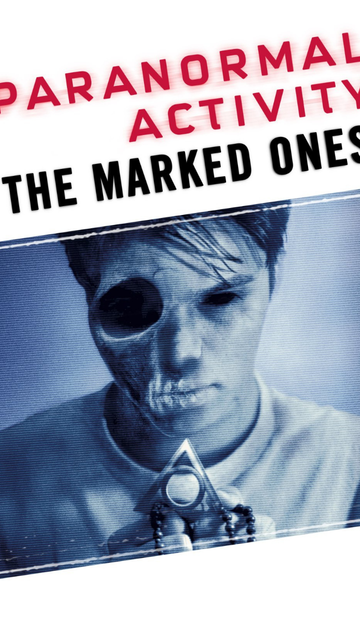
Paranormal Activity: The Marked Ones (2014) Review: A Franchise That Has Lost Its Way
Five films into my Paranormal Activity marathon, and I’m beginning to wonder whether the filmmakers have any idea where this franchise is supposed to be heading. Having thoroughly enjoyed revisiting the first three instalments, I was already disappointed by how little Paranormal Activity 4 contributed to the wider story. Unfortunately, Paranormal Activity: The Marked Ones has somehow managed to leave me even more frustrated. What originally began as a relatively straightforward supernatural horror story about a demonic presence tormenting a young couple has gradually developed into an increasingly complicated mythology involving mysterious covens, demonic rituals and now, apparently, time travel. How exactly did we get here? More importantly, why has a franchise that once terrified me through its simplicity become so obsessed with explaining and expanding its supernatural mythology that it seems to have forgotten how to be frightening?
Released in 2014 and directed by Christopher Landon, Paranormal Activity: The Marked Ones follows Jesse Arista (Andrew Jacobs), a teenager living in Oxnard, California, who begins experiencing increasingly disturbing events after investigating the mysterious death of a woman living in his apartment building. Alongside his best friend Hector (Jorge Diaz), Jesse initially treats the unexplained occurrences as something exciting, particularly when he begins developing unusual abilities. However, as his behaviour becomes increasingly aggressive and unpredictable, it becomes apparent that something far more sinister is taking place. The investigation eventually uncovers connections to a mysterious group involved in supernatural rituals, suggesting that Jesse’s experiences may be linked to the demonic presence that has haunted the franchise since its beginning.
One of the first things that caught my attention was the inclusion of an actual production logo at the beginning of the film. It’s a relatively insignificant detail, but after watching four instalments that immediately presented themselves through supposedly recovered camera footage, I found the change surprisingly noticeable. For a brief moment, I wondered whether this might signal a more substantial departure from the franchise’s established production style, perhaps with greater ambition or a more polished presentation. Unfortunately, that wasn’t particularly the case. Although the film moves away from the security camera approach and relies more heavily on handheld recording equipment, the overall production doesn’t feel noticeably more impressive than what we’ve already experienced. If anything, I found the new approach considerably less effective.
The decision to abandon the predominantly static camera presentation is probably one of my biggest problems with The Marked Ones. I’ve repeatedly praised the earlier films for their ability to generate suspense by forcing us to examine seemingly ordinary rooms, desperately searching for the slightest indication that something supernatural might be happening. Here, however, the reliance on handheld footage creates a completely different experience. The camera is constantly moving, often capturing events in broad daylight, and much of the unsettling atmosphere that defined the original trilogy has disappeared. Another noticeable omission is the familiar text announcing each new night, something that had become an important part of the franchise’s identity. In the earlier films, seeing ‘Night 1’, ‘Night 2’ and so on appear on screen immediately created a sense of anticipation, because you knew another opportunity for something terrifying to happen was approaching. Without those transitions, the film loses that gradual sense of escalation that made the previous instalments so effective. I understand that the filmmakers wanted to differentiate this movie from its predecessors, but I couldn’t help feeling that they’d abandoned several of the franchise’s most effective filmmaking techniques without finding anything equally compelling to replace them.
Perhaps the biggest consequence of this change is that The Marked Ones is, without question, the least frightening instalment I’ve watched so far. Even Paranormal Activity 4, which I found incredibly disappointing, managed to deliver a handful of unsettling moments through its motion tracking technology and the return of Katie. This film, however, barely frightened me at all. There are occasional supernatural encounters and moments of physical aggression, but very little that creates the lingering sense of dread I’ve come to associate with the franchise. Rather than spending the running time anxiously anticipating what might happen next, I found myself becoming increasingly bored. Considering that these movies originally built their reputation around making audiences terrified of what might be lurking in the darkness, that’s a pretty damning criticism.
Another major difference is the decision to focus on Jesse’s gradual transformation rather than the supernatural disturbances surrounding him. As the story develops, we learn that his mother was subjected to a ritual while pregnant, apparently marking Jesse as a potential vessel for a demonic entity once he reaches adulthood. It’s an interesting enough concept for a supernatural possession film, but I don’t think it works particularly well as an instalment in the Paranormal Activity franchise. Much of the narrative revolves around Jesse discovering his abilities and gradually losing control of himself, rather than witnessing the kind of unexplained disturbances that made the previous movies so effective. There’s nothing inherently wrong with exploring possession from a different perspective, but when the central attraction of your franchise is the paranormal activity itself, removing so much of that element feels like a questionable decision.
I was also initially interested in the prospect of following an entirely new group of characters within a different cultural environment. After spending four movies predominantly exploring the experiences of Katie, Kristi and the families connected to them, there was an opportunity to introduce a fresh perspective and potentially explore supernatural beliefs through a different cultural lens. Unfortunately, I don’t think the filmmakers make particularly meaningful use of the setting. Although the characters and their surroundings provide some welcome visual variety, the story doesn’t explore that environment in a way that makes the horror feel especially distinctive. It ultimately becomes another supernatural possession narrative, only this time without the atmosphere or memorable scares that made the earlier instalments enjoyable.
Unfortunately, I didn’t find the characters particularly memorable either. Jesse and Hector have a believable friendship, and their initial excitement surrounding the strange events provides a slightly different dynamic from the increasingly terrified families we’ve followed previously. However, I struggled to become invested in their experiences, particularly as Jesse’s transformation began dominating the narrative. None of the performances are necessarily bad, but I can’t say anyone left a lasting impression on me. By comparison, characters such as Katie, Kristi and even the frustrating Micah gave the earlier films recognisable personalities and relationships that helped make the supernatural encounters feel more personal. Here, I found myself far more interested in understanding how the story connected to the wider franchise than in what was actually happening to the characters on screen.
And that brings me to what is undoubtedly my biggest frustration with The Marked Ones: the increasingly convoluted mythology. The first film introduced a demonic presence that appeared to have been following Katie since childhood. The sequels gradually expanded that mystery, suggesting that her family may have been involved in an agreement requiring the sacrifice of a firstborn male child, with Hunter becoming a central figure in the story. By the third instalment, we’d also learned about the possible involvement of a mysterious coven connected to the sisters’ grandmother. Although these developments raised plenty of questions, I could at least understand how they might fit together. Now, however, we’re being introduced to additional rituals, potential demonic vessels and an entirely new collection of characters whose connection to the original story feels increasingly complicated. Rather than making the mythology more interesting, I think the filmmakers are making it unnecessarily difficult to follow.
Things become even more confusing during the film’s final act, when Hector and the others attempt to rescue Jesse and find themselves confronting members of the mysterious coven. The sequence eventually takes us back to the house belonging to Katie and Kristi’s grandmother, connecting the events to locations and characters we’ve encountered previously. I’ll admit that the sight of several women lurking outside the property creates a reasonably tense atmosphere, particularly because we know they’re associated with something deeply sinister. However, I wouldn’t necessarily describe the sequence as frightening. It’s more nerve racking than anything else, and much of that tension comes from the characters being pursued rather than the supernatural presence itself. While I appreciated the attempt to reconnect the narrative with the earlier films, it did little to resolve my growing confusion.
Then comes the revelation that really made me question where this franchise is heading. Through an apparent supernatural doorway, Hector finds himself transported back to the events of the original Paranormal Activity, arriving at Katie and Micah’s house on the night of Micah’s death. I can appreciate why the filmmakers might have considered this a clever way of connecting the different instalments, and there’s certainly something intriguing about revisiting such an important moment from an entirely new perspective. However, introducing what effectively amounts to time travel into a franchise that began as a relatively grounded demonic haunting feels like an enormous departure from its original identity. Rather than being impressed by the connection, I found myself wondering why the mythology needed to become so complicated in the first place. What happened to simply being terrified of an invisible presence moving around someone’s house?
What makes this particularly disappointing is that I don’t believe the franchise needed such a drastic reinvention. The first three films all followed essentially the same formula, yet I enjoyed every one of them because they understood how to build tension, deliver memorable supernatural encounters and gradually expand the overarching mystery. Even the fourth instalment, despite its considerable shortcomings, at least maintained some connection to the style and atmosphere that originally made the series successful. The Marked Ones, on the other hand, feels like a completely different type of horror film that has been awkwardly connected to the existing mythology. I appreciate the desire to experiment with new characters and filmmaking techniques, but surely there’s a way to introduce fresh ideas without sacrificing everything that made the franchise appealing in the first place.
Ultimately, Paranormal Activity: The Marked Ones is easily my least favourite instalment of the franchise so far, and the first film in this marathon that I genuinely struggled to enjoy. The absence of meaningful scares, the uninspired handheld presentation and the increasingly convoluted mythology combine to create an experience that feels frustratingly disconnected from what made the original movies so effective. I went into this sequel hoping that a new cast and setting might revitalise the franchise after the disappointing fourth instalment, but instead I found myself watching a supernatural possession story that rarely managed to hold my attention. Perhaps the most frustrating thing is that I’m still interested in discovering the truth behind Katie, Kristi and their family’s connection to the entity, yet each new film seems determined to make that mystery even harder to understand. At this point, I can only hope the remaining instalments remember what made Paranormal Activity such an effective horror franchise in the first place. Because right now, it feels as though the series has completely lost its way.