


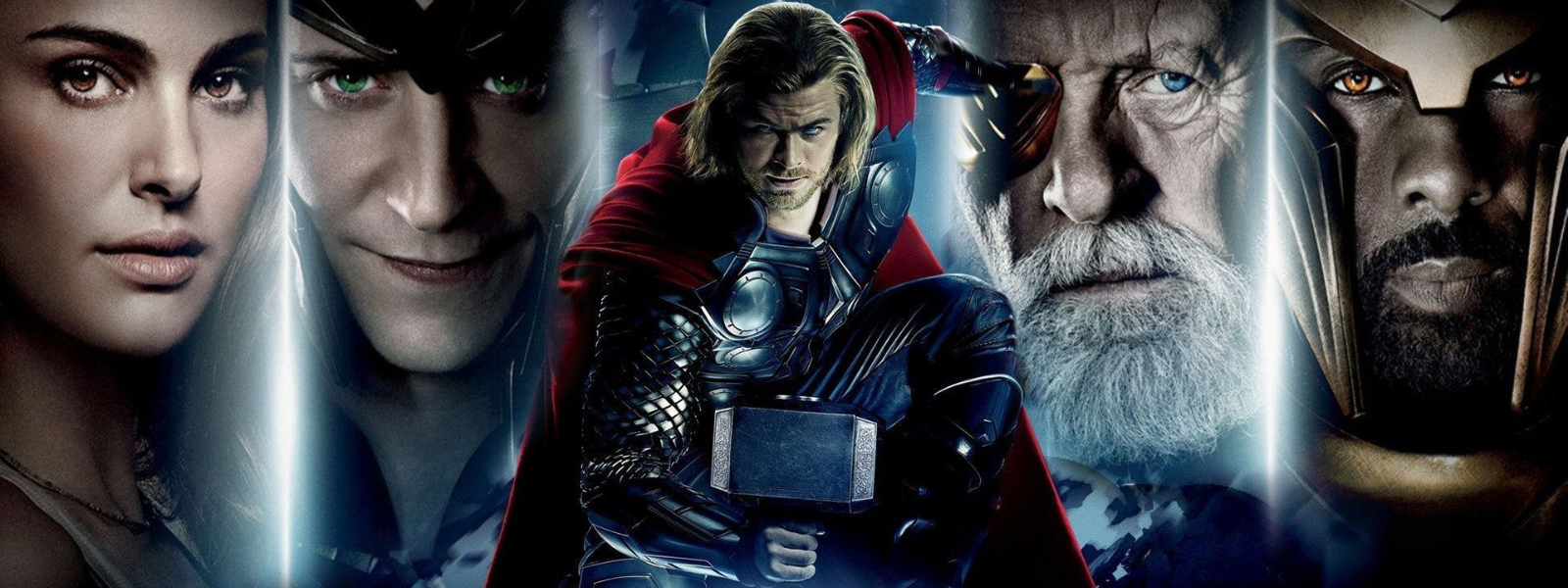
Review – Thor
Director – Kenneth Branagh
Starring – Chris Hemsworth, Natalie Portman, Tom Hiddleston, Anthony Hopkins, Stellan Skarsgård, Kat Dennings and Idris Elba
Runtime – 1 hour and 54 minutes
Release date – 27th April 2011
Certificate – 12
Plot – Thor is exiled by his father, Odin, the King of Asgard, to the Earth to live among mortals. When he lands on Earth, his trusted weapon Mjolnir is discovered and captured by S.H.I.E.L.D.
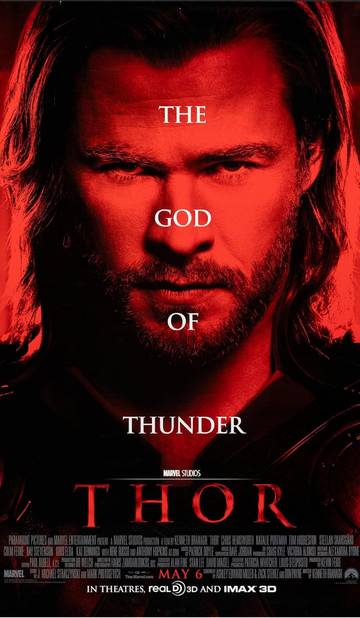
There’s a very specific kind of nostalgia attached to revisiting Thor now, especially when you remember where the Marvel machine was at the time. After Iron Man, Iron Man 2, and The Incredible Hulk, Marvel wasn’t just building heroes, it was quietly expanding genres. With Thor, the MCU steps confidently into its fantasy corner, trading grounded tech and military tension for gods, realms, and myth. It’s a gamble that pays off, acting as a gateway into the larger scale of the universe while planting seeds that would only fully bloom years later. Watching it again, I genuinely forgot just how good this film is as both a standalone origin and a piece of something much bigger.
The opening alone is enough to hook you. Thor and his companions storming Jotunheim feels like Marvel flexing its imagination for the first time, frost giants towering, icy landscapes stretching endlessly, and the sheer chaos of battle erupting almost immediately. The confrontation escalates with thrilling momentum, culminating in Thor taking down the Jotunheim Beast with a confidence that borders on arrogance. It’s loud, fast, and mythic in scale, and it immediately tells you this isn’t just another superhero story, it’s something grander, something almost operatic.
That sense of grandeur does take a noticeable step back once Odin intervenes. When Odin strips Thor of his power and banishes him to Earth, the film trades cosmic spectacle for a dusty New Mexico town. On paper, it is a comedown, and visually it is, but thematically it is where the film finds its spine. Thor is forced to confront humility, responsibility, and the consequences of his recklessness. The smaller setting allows those lessons to breathe, even if part of you is itching to get back to Asgard.
At its core, Thor is really a story about worthiness, not power. The hammer is not just a weapon, it is a test. At the beginning of the film, Thor already has strength, confidence, and the ability to dominate any battlefield, but he lacks the qualities that actually make him a leader. His arrogance, his need for glory, and his disregard for consequence are what cost him everything. Being stripped of his power forces him to understand that worthiness is not about how strong you are, it is about how you use that strength and whether you are willing to put others before yourself. By the time he proves himself, it is not through victory in battle, but through sacrifice. That shift is what gives the film its emotional weight and separates it from a standard origin story.
And then there’s the connective tissue that made early MCU films so exciting. When Phil Coulson shows up, it’s more than just a cameo, it is a reminder that everything is linked. It answers lingering questions from the end of Iron Man 2 while teasing something bigger behind the curtain. Back then, waiting through the credits felt like uncovering a secret, each tease building anticipation brick by brick, and it is a feeling that is hard not to miss when looking back at these early entries.
There is also a warmth to the film that comes from its humour, and a lot of that rests on Chris Hemsworth. While later films like Thor: Ragnarok and Thor: Love and Thunder lean further into comedy, the foundations are clearly here. Whether it is Thor smashing a coffee mug and demanding another or walking into a pet shop and declaring that he needs a horse, the humour feels natural to the character rather than forced. It highlights how out of place he is, while still keeping him likeable.
Rewatching it also brings a sense of appreciation for the smaller touches, including the cameo from Stan Lee. It is a brief moment, but it carries a lot of charm and serves as a reminder of the personality that helped shape this universe. These appearances always added a layer of fun and connection, and it is something that feels especially meaningful now.
Performance wise, the film quietly assembles key players who would go on to define the MCU. Tom Hiddleston is exceptional as Loki, bringing vulnerability and complexity that elevate every scene he is in, while Jeremy Renner makes a brief but memorable appearance as Hawkeye. It is another example of how these early films were carefully building towards something bigger, introducing characters in ways that rewarded audiences who were paying attention.
That said, the film does stumble in a way that would become a recurring critique for the MCU. It is not that Loki is a weak villain, far from it, but the film splits its focus between him, the frost giants, and the Destroyer, which results in a lack of a single dominant threat. The Destroyer battle is visually fun, but it lacks the emotional weight it could have had. It is easy to imagine how impactful a final showdown between Thor and Laufey might have been, with Loki’s full reveal saved for later. On top of that, for the God of Thunder, Thor’s use of lightning is surprisingly limited, which feels like a missed opportunity given the character’s potential.
Under the direction of Kenneth Branagh, the film carries a distinctly Shakespearean tone, blending family conflict, betrayal, and questions of identity into a blockbuster format. It can feel slightly cheesy at times, but that theatricality is part of its charm and helps it stand out within the early MCU. Looking back now, Thor might not be the flashiest MCU film, but it is one of the most important. It proved Marvel could do fantasy, Shakespearean drama, comedy, and still make it fit into one shared universe, and as part of Phase 1, it plays a key role in shaping the variety and ambition that would define what came next.