


Review – Frankenstein (2025)
Director – Guillermo Del Toro
Starring – Oscar Isaac, Jacob Elordi, Christopher Waltz, Mia Goth, Felix Kammerer and Charles Dance
Runtime – 149 minutes
Release date – 7th November
Certificate – 15
Plot – A brilliant but egotistical scientist brings a monstrous creature to life in a daring experiment that ultimately leads to the undoing of both the creator and his tragic creation.
REVIEW:
When I first heard Guillermo del Toro was making a Frankenstein movie, I immediately thought, sign me up! His filmography alone is proof that this is a filmmaker who understands monsters better than most, not as spectacles, but as tragic, emotionally complex beings. If anyone can translate Mary Shelley’s gothic horror epic into something meaningful for a modern audience, it’s Del Toro. His fascination with outsiders, obsession, and moral decay feels almost purpose-built for this story, and from the opening moments it’s clear this is a deeply personal project rather than a routine adaptation.
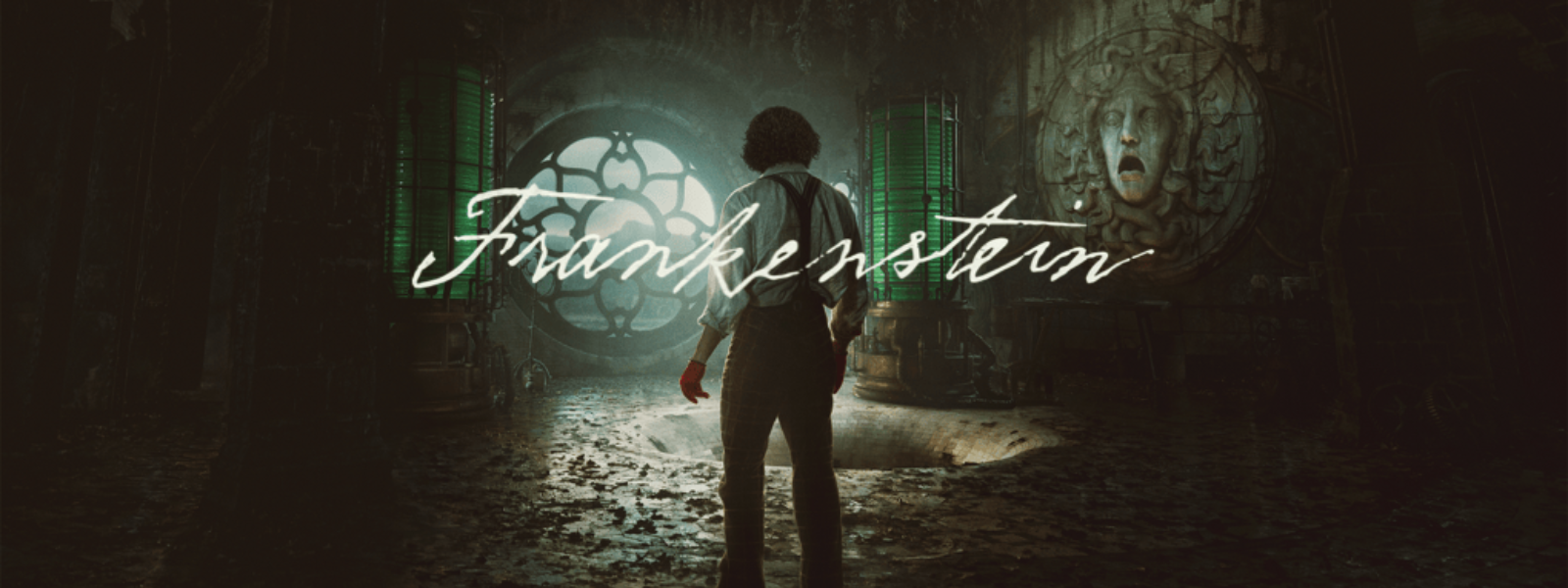
Visually, this film is absolutely stunning. The production design, the sprawling sets, the rich colour palette and the meticulous effects all feel premium and handcrafted. Every frame looks carefully composed, soaked in atmosphere and texture. It honestly feels criminal that this never received a full theatrical release, because this is the kind of film that begs to be experienced on the biggest screen possible. Watching it at home, you can still sense the scale, but there’s a lingering frustration knowing how much more immersive it could have been in a cinema.
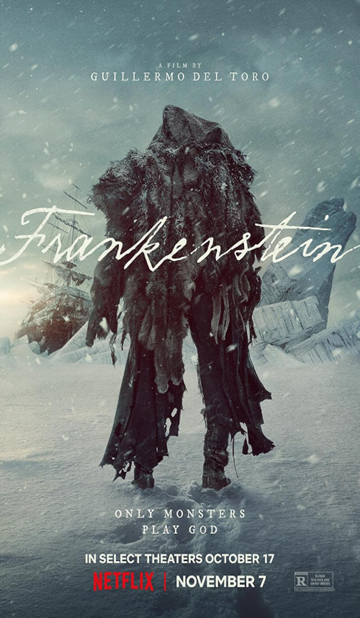
Del Toro also makes a bold choice with the monster’s design. Gone are the familiar bolts in the neck and the squared-off head that have defined Frankenstein for generations. Instead, this creature is taller, physically imposing, and disturbingly well-formed, stitched together into something that feels almost beautiful at first glance. Jacob Elordi brings a striking physical presence to the role, making the monster both alluring and grotesque. Yet once the creature begins to understand his own strength, that beauty gives way to terror, and he becomes an unstoppable force shaped by neglect and cruelty.
Structurally, the film plays like a novel brought to life. There’s a clear prologue, followed by defined “chapters” that separate Victor’s story from the creature’s. This approach works well in grounding the film in Shelley’s literary roots, giving each perspective space to breathe. Victor’s section feels obsessive and feverish, while the creature’s portion is quieter, more reflective, and ultimately more devastating. It’s a confident storytelling choice that reinforces the film’s themes of creation, responsibility, and abandonment.
Oscar Isaac is phenomenal as Victor Frankenstein. He leans fully into Victor’s arrogance, brilliance, and moral blindness, delivering a performance that is captivating even when the character is deeply unlikeable. There’s an almost whimsical tone during the creation sequences, with Victor darting around his laboratory like a mad artist chasing perfection. These moments carry a Tim Burton-esque energy, reminiscent of Edward Scissorhands or Charlie and the Chocolate Factory, just drenched in far more blood, decay, and dismembered limbs. It’s strange, unsettling, and oddly playful all at once.
What truly sets this film apart is how completely different it feels from any Frankenstein movie that has come before it. Del Toro isn’t interested in retelling a familiar story beat for beat; instead, he reshapes it through his own lens of melancholy and horror. The acting across the board is strong, and the film’s design and visuals are consistently breathtaking. However, the pacing is undeniably uneven. There are multiple stretches where the story drags, lingering too long on moments that don’t always justify their runtime, which slightly blunts the emotional impact.
One of the film’s greatest strengths is its moral clarity. This is not a story where the monster is the true villain lurking in the shadows. Del Toro makes it abundantly clear that Victor is the real antagonist, a man who creates life and then recoils from it, refusing to take responsibility for his actions. The creature’s violence is framed not as inherent evil, but as the tragic result of isolation, rejection, and abuse. It’s a powerful reframing that feels both faithful to Shelley’s intent and painfully relevant.
The film ends on a haunting note, leaving the audience with a burning question: what will the monster do now? There’s no neat resolution, only uncertainty and the weight of consequences still unfolding. That ambiguity lingers long after the credits roll. My one major disappointment, however, is the absence of the iconic line “It’s alive.” As much as this film reinvents the myth, that line feels embedded in the DNA of Frankenstein, and its omission is noticeable. Still, despite its flaws, this is a bold, visually ravishing, and emotionally rich take on a classic, unmistakably stamped with Guillermo del Toro’s singular voice.