


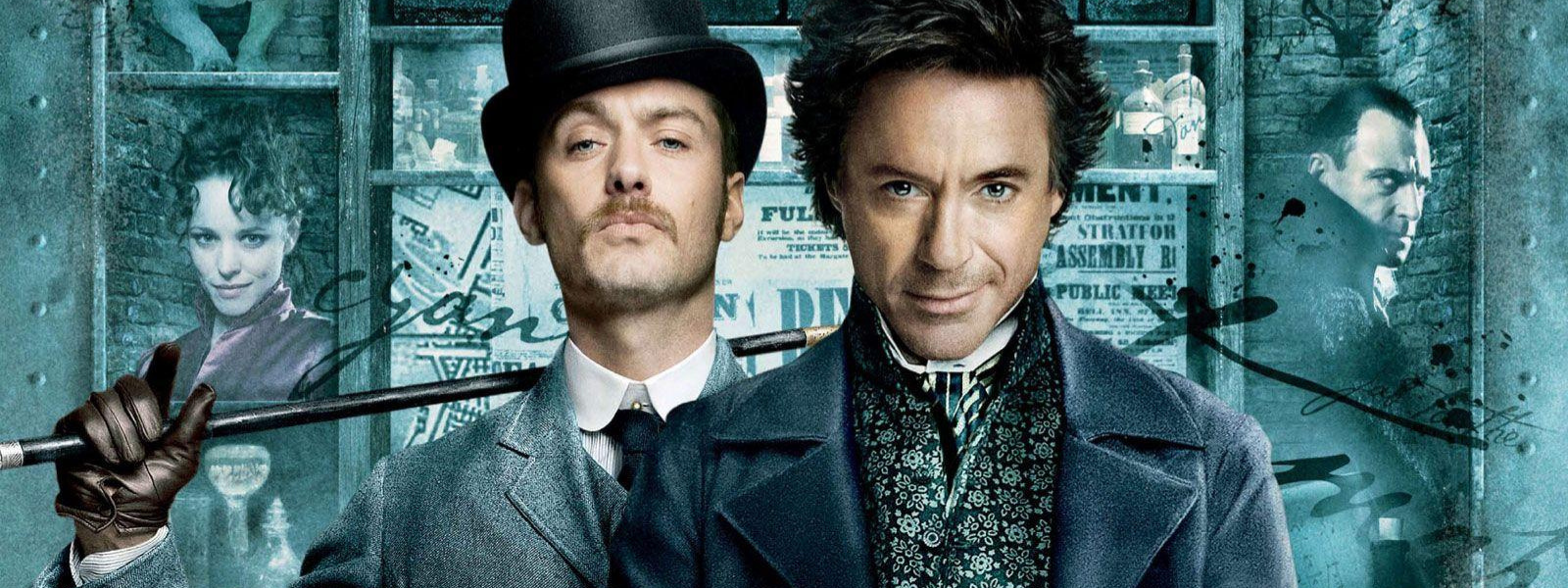
Review – Sherlock Holmes
Director – Guy Ritchie
Starring – Robert Downey Jr., Jude Law, Mark Strong, Rachel McAdams, Kelly Reilly, Eddie Marsan and Robert Maillet
Runtime – 2 hours and 8 minutes
Release date – 26th December 2009
Certificate – 12
Plot – Detective Sherlock Holmes and his partner, Dr Watson, send Blackwood, a serial killer, to the gallows. However, they are shocked to learn that he is back from the dead and must pursue him again.
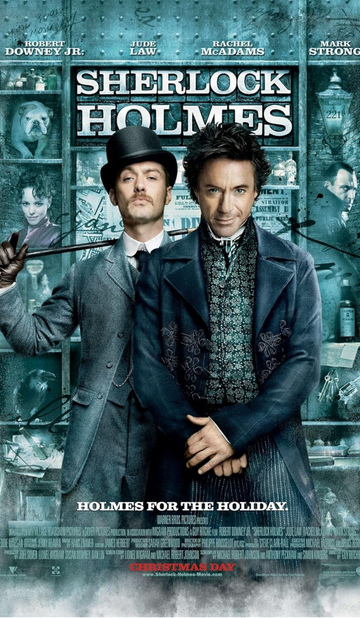
There are certain characters in cinema history that feel almost untouchable. Characters so deeply rooted in British culture that any modern reinvention risks collapsing under the weight of expectation. That was exactly how I felt when Sherlock Holmes was first announced. Casting Robert Downey Jr. as Holmes seemed like an odd decision at the time. Even though I was already a huge fan of his work, I genuinely questioned whether an American actor could convincingly portray one of the most iconic British literary characters ever created. I could not have been more wrong. Not only does Downey Jr. absolutely nail the role, but he has gone on to become my favourite version of Sherlock Holmes put to screen.
A huge reason the film works so well comes down to director Guy Ritchie. Looking back at his filmography before this movie, he honestly felt like the perfect choice. His fast-paced editing, gritty British style and experience with stylish gangster films gave this adaptation a unique identity that separated it from every other Sherlock Holmes interpretation. Rather than delivering another stiff and overly traditional detective story, Ritchie injects the film with energy, swagger and personality. His signature directing style fits surprisingly naturally into Victorian London, making the city feel dangerous, dirty and alive. It almost feels like a Victorian crime thriller mixed with a British street brawler, and somehow that combination completely works.
One of the most memorable elements of the film is the action. This is probably the first Sherlock Holmes adaptation where the fight scenes are genuinely exciting to watch. The sequences where Holmes slows everything down in his mind and narrates exactly how he is about to dismantle his opponent are brilliant. Watching him analyse every movement before the scene snaps back into real time is such a clever way of visualising how his brain operates. It transforms Holmes into more than just an intelligent detective; it shows him as someone constantly calculating every possible outcome around him. The blend of slow motion, sharp editing and brutal choreography gives the movie a very distinctive identity.
Downey Jr. is excellent on his own, but the film truly comes alive whenever he shares the screen with Jude Law as Watson. Their chemistry is phenomenal from the very beginning. They bounce off each other so naturally that you would think they had been making films together for years. What makes their relationship work so well is how believable the friendship feels. Their conversations are full of irritation, sarcasm and dry humour, but underneath it all there is genuine loyalty and respect. The screenplay understands that the entertainment does not just come from solving mysteries; it comes from simply watching these two characters interact with one another.
More importantly, the friendship between Holmes and Watson becomes the real heart of the movie. They do not just feel like detective partners thrown together for the story; they genuinely feel like two men who have spent years side by side experiencing chaos together. There is an almost brotherly bond between them that gives the film much of its charm. Holmes constantly frustrates Watson, invades his personal life and drives him to exhaustion, yet you never doubt how much they care about one another. Likewise, Watson is one of the only people capable of grounding Holmes and understanding how his mind works. That emotional connection gives the film warmth beneath all the action, mystery and humour, and it is ultimately the reason the audience becomes so invested in their journey together.
The humour throughout the film is another major strength. It is not a comedy in the traditional sense where characters are constantly throwing out punchlines, but the dialogue itself is incredibly funny. Holmes and Watson have this constant back-and-forth that feels effortless and natural. Whether they are arguing, insulting each other or reluctantly working together, the conversations always feel entertaining. The writing captures Holmes as somebody who appears borderline psychotic to outsiders, yet underneath the chaos is an extraordinary genius. That balance is important because the filmmakers clearly understood the source material rather than simply turning Holmes into a generic action hero.
The production design deserves enormous praise as well because the film completely immerses you in 1890s London. Every alleyway, tavern, dock and construction site feels authentic and lived in. There is constantly smoke filling the air, mud covering the streets and industrial machinery clanking away in the background. You genuinely feel transported back in time. The soundtrack complements this atmosphere perfectly too. Instead of sounding grand and elegant, the music has this rough, industrial quality to it that matches the dirty and mechanical feel of the city. It gives the movie a unique sound that stands out from most blockbuster scores.
The mystery itself is intriguing because the film constantly makes you question whether Lord Blackwood’s abilities are genuinely supernatural or simply an elaborate illusion. That uncertainty keeps the story engaging for a large portion of the runtime. However, this is also where the film occasionally struggles. The plot can become difficult to follow at times, particularly during the investigation scenes where information is thrown at the audience very quickly. There were moments where the pacing dragged slightly because the narrative became overly tangled in its own clues and explanations. It is not enough to ruin the experience, but it does stop the film from feeling truly great.
As for Lord Blackwood himself, Mark Strong gives a solid performance, and I generally enjoy him in almost everything he appears in. Unfortunately, the character is fairly generic. Despite all the buildup surrounding him, there is not a huge amount that makes him particularly memorable compared to other cinematic villains. He serves the story well enough, but the film is carried far more by Holmes and Watson than by the antagonist they are facing.
One thing I particularly appreciated was how useful Watson is throughout the investigation. So many adaptations reduce him to simply being the muscle or comic relief, but this film allows him to actively contribute to solving the mystery. He notices details, helps connect clues and challenges Holmes when necessary. It makes the partnership feel balanced rather than one-sided, which only strengthens the chemistry between the two leads even further.
The final confrontation on top of London Bridge is a fittingly dramatic climax. The setting itself is visually fantastic, especially with the unfinished bridge towering over the city. The fight between Holmes and Blackwood may not be the most emotionally powerful finale ever written, but it is undeniably cool and delivers the kind of cinematic spectacle the film had been building towards from the start.
By the time the credits rolled, I found Sherlock Holmes immensely enjoyable despite its flaws. The ending clearly sets up a sequel, although I do think the cliffhanger could have been stronger and more intriguing. It hints at bigger things to come without delivering a truly jaw-dropping final reveal. Still, I was immediately excited to see another film simply because Downey Jr. and Jude Law were so entertaining together. More than anything, the film succeeds because it reinvents a legendary character without ever losing what made him iconic in the first place. Beneath the stylish action, humour and blockbuster spectacle remains the brilliant, eccentric detective that audiences have loved for generations, and that is what makes this adaptation so memorable.